
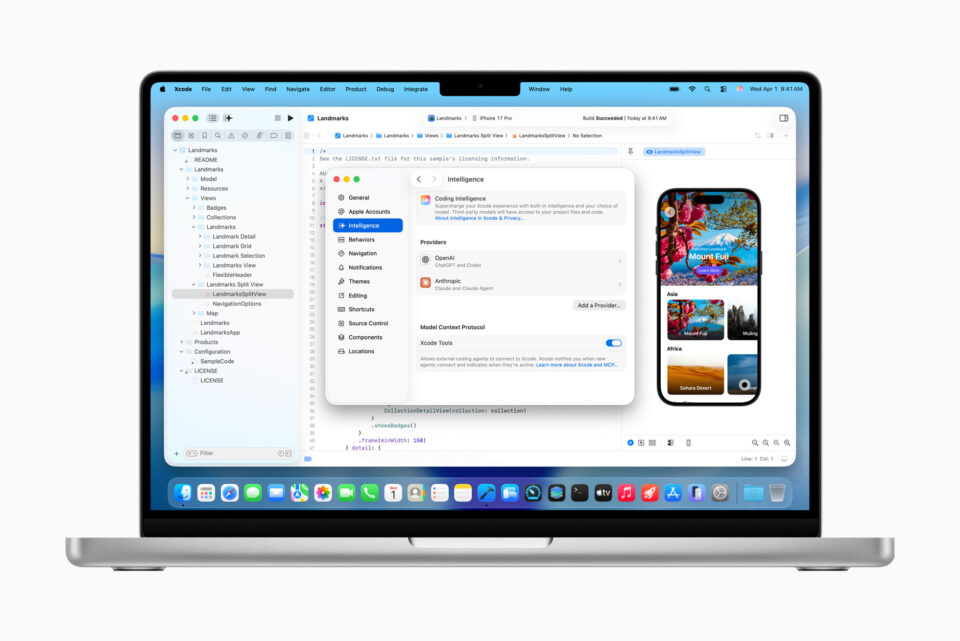
Apple has taken one big step forward in software development on its platforms by releasing Xcode 26.3. The update puts strong emphasis on agentic coding, which is a major advance allowing developers to integrate intelligent agents such as Anthropics Claude Agent and OpenAIs Codex right from the Xcode environment. The release changes the whole concept of app building by speeding up the developers flow, giving more room for creativity, and handling complicated programming tasks automatically and very efficiently.
What Is Xcode 26.3 and Why It Matters
Xcode has always been the primary tool for creating applications through Apple’s entire ecosystem: iPhone, iPad, Mac, Apple Watch, and so on. Back in the days, developers hand- coded and tested their programs with the help of tools providing mainly syntax assistance, and debugging help. Apple has decided to enable agentic coding with Xcode 26.3, a very forward looking move where intelligent agents are not only capable of suggesting code but can also be allowed to do stuff on behalf of developers.
Rather than just giving you an autocompletion or documentation suggestions, these AI agents can be autonomous operatives inside your project. It means that they can understand the existing codebase, decompose tasks, make architectural decisions, update project settings, and finally, verify results through visual previews.
The change, of course, makes the physical labor of programming less by a large margin and even opens up new ways of working, especially with the handling of tedious or lengthy processes.
Agentic Coding: What It Can Do
So what exactly can these agents accomplish?
Here are some real-world capabilities introduced in Xcode 26.3:
1. Task Breakdown and Execution
Developers can instruct an integrated agent using natural language commands—like “add a new login feature with biometric authentication”—and the agent will deconstruct the request, analyze the project structure, and start building the feature step by step.
2. Documentation and Search
Agents have deep access to Apple’s developer documentation, allowing them to find relevant APIs and code examples to support their work. They don’t just recommend — they apply that knowledge directly to your project.
3. Code Building and Testing
Once agents write or modify code, they can initiate builds and run tests inside Xcode. They automatically iterate on errors until the build succeeds or meets developer goals.
4. Visual Verification
One of the most exciting features is the ability to capture and analyze Xcode previews. Agents visually verify that UI elements match intended designs or behaviors, enabling a feedback loop that merges code generation with visual design validation.
5. Project Optimization
Agents can modify project settings, refactor code, restructure files, and suggest improvements based on best practices—all while keeping developers in control with change tracking and undo support.
Model Context Protocol (MCP): The Open Standard Behind the Magic
Central to this new design is the incorporation of the Model Context Protocol (MCP), an open standard that enables Xcode to reveal its features to external intelligent agents. Simply put, MCP allows developers to pick a variety of AI providers and bring any compatible agent into their work process.
If you are inclined towards Claude, Codex, or other AI tools that might be available later on, MCP guarantees that you can still work with different AI providers and exchange plug, ins. This is because MCP is designed to ensure both flexibility and extensibility which will in turn foster the development of a robust ecosystem of intelligent development tools alongside Xcode.
Benefits for Developers of All Levels
The agentic coding experience in Xcode 26.3 brings benefits across the board:
Boosted Productivity
Routine tasks like writing boilerplate code, setting up build configurations, or navigating documentation are now automated—freeing developers to focus on creative problem-solving and higher-level design.
Accelerated Learning Curve
Beginners and intermediate developers can learn modern APIs and best practices faster as agents handle complex tasks while developers observe and refine.
Team Efficiency
Teams can standardize workflows by pairing human intuition with agentic consistency. Projects are brought to stable builds more quickly, helping teams ship features faster.
Availability and What’s Next
Xcode 26.3 is currently out as a release candidate to members of the Apple Developer Program, and Apple has made it known that it will soon be available broadly through the Mac App Store.
The update is a continuation of the previous Xcode intelligence enhancements that brought in AI, assisted code writing and debugging capabilities. Now that agentic coding is front and center, Apple is very much in line with the future of AI, driven software engineering by development tools putting smarter, more autonomous assistance right into developers hands.
Conclusion
Xcode 26.3 is a game changer in the app development process for Apple ecosystems. Through the introduction of smart assistant features handling coding operations independently, Apple has indeed increased developer power while at the same time changing the very nature of the work done. Developer productivity is bound to increase substantially when seasoned engineers or novice developers alike resort to agentic coding for their workflows.
