
About NDM
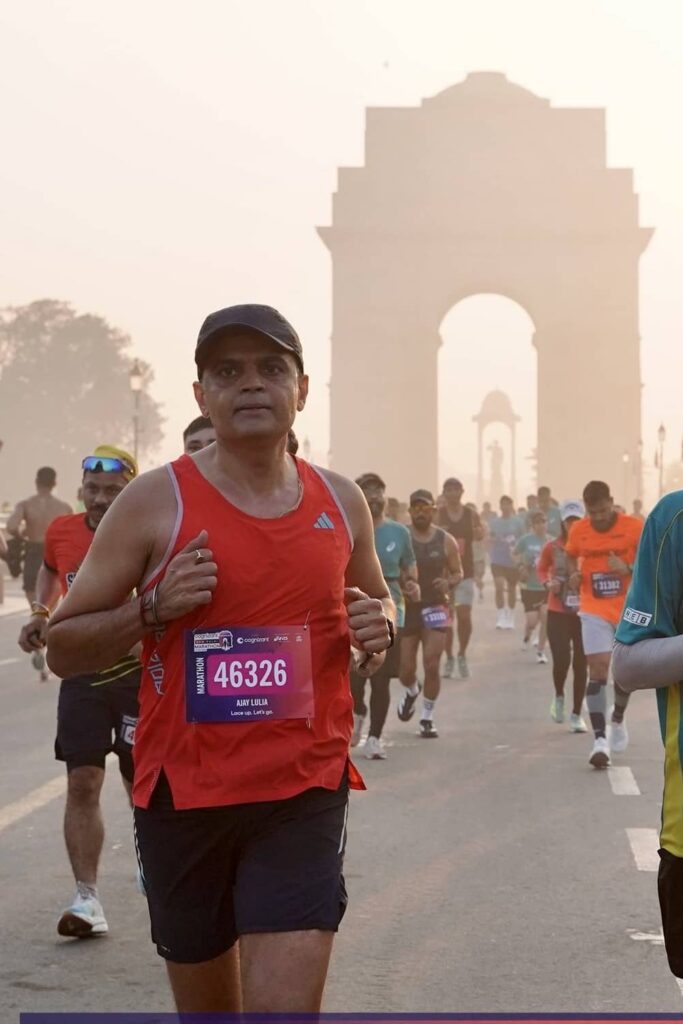
The Cognizant New Delhi Marathon (NDM) is more than just another race on the running calendar — it is one of India’s most prestigious marathon events. Recognised as the National Championship and presented by NEB Sports, the race attracts some of the finest runners from across the country.
With its dream course, pleasant runner-friendly weather, and an electrifying race-day atmosphere, New Delhi Marathon has become a stage for remarkable performances year after year. Many athletes who perform strongly here even earn opportunities to represent India at international competitions, making the event special for both elite and amateur runners alike.
The Planning and Registration for the New Delhi Marathon
While I was training for the Tata Mumbai Marathon 2026 Half Marathon, I learned that many runners from my club were planning to participate in New Delhi Marathon. Initially, I registered for the Half Marathon on November 15 while continuing my TMM preparation.
During a discussion in our group about my WNC Navy Half Marathon blog and performance, my coach casually suggested that Roopan and I upgrade from the Half Marathon to the Full Marathon.
My immediate response was:
“If you feel I can do it, I will give my best and aim for a strong PB there as well.”
Deep down, I knew a marathon required a completely different mindset and much higher discipline. Nevertheless, I trusted my coach and began following the training plan wholeheartedly.
I emailed the New Delhi Marathon organisers the same day, requesting an upgrade from half marathon to marathon, sharing my WNC Navy Half Marathon timing. Soon after, I received confirmation from New Delhi Marathon that my registration had been successfully upgraded. Interestingly, my marathon training had already begun even before receiving the official confirmation.
Training
I focused on aligning my work, family responsibilities, and training schedule as efficiently as possible. However, due to travel and professional commitments, I missed a few long runs along the way.
At the same time, I started paying closer attention to diet and sleep, both of which became crucial parts of my preparation.
My weekly structure looked like this:
- Tuesday: Interval training
- Thursday: Tempo runs
- Saturday: Long runs
- Sunday: Recovery runs
- Wednesday & Friday: Gym workouts (strength/functional training)
- Monday: Rest day
Long runs taught me discipline — how to control pace, manage breathing, and understand hydration and gel timing during extended efforts.
A few days before the race, Rathod Sir called to discuss my goal time.
I said, ‘4:30’.
He designed a detailed pacing strategy, which I programmed into my Garmin:
- First 16 km: 6:18 – 6:25/km
- Next 16 km: 6:12 – 6:18/km
- Final 10.4 km: 6:05 – 6:12/km
I was sceptical about maintaining the final segment at that pace. That’s when he said something I stored permanently in my mind:
“The first two 16 km are your warm-up. The last 10.4 km is your marathon.”
Pre-Race Preparation
I reached Delhi on Friday evening and met the group. After a light stretching session with Kiran and Sanjay, we had dinner and called it a day.
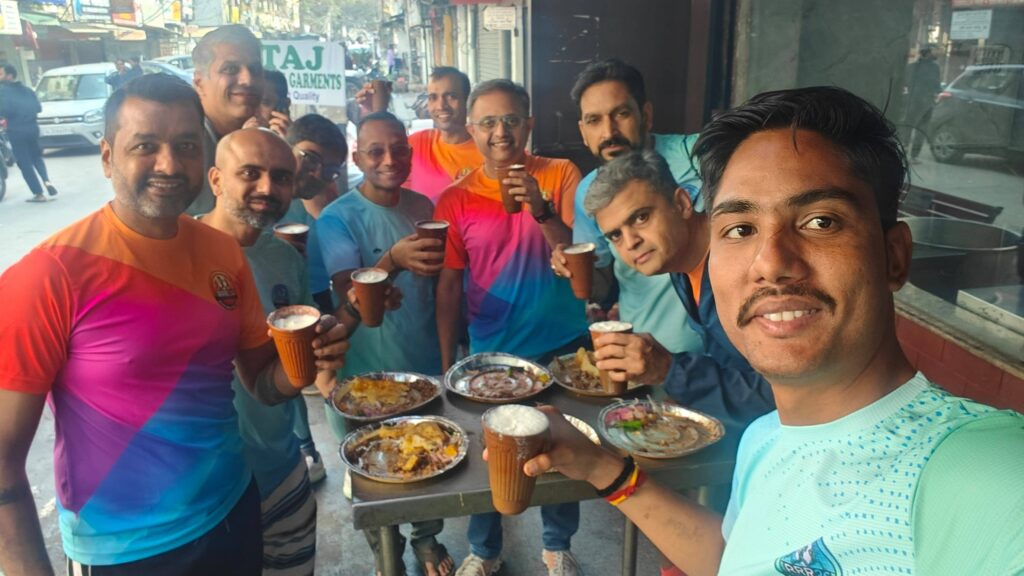
Saturday morning included a 3 km shakeout run near Nehru Park, followed by chai at a local tapri – a small but memorable pre-race ritual.
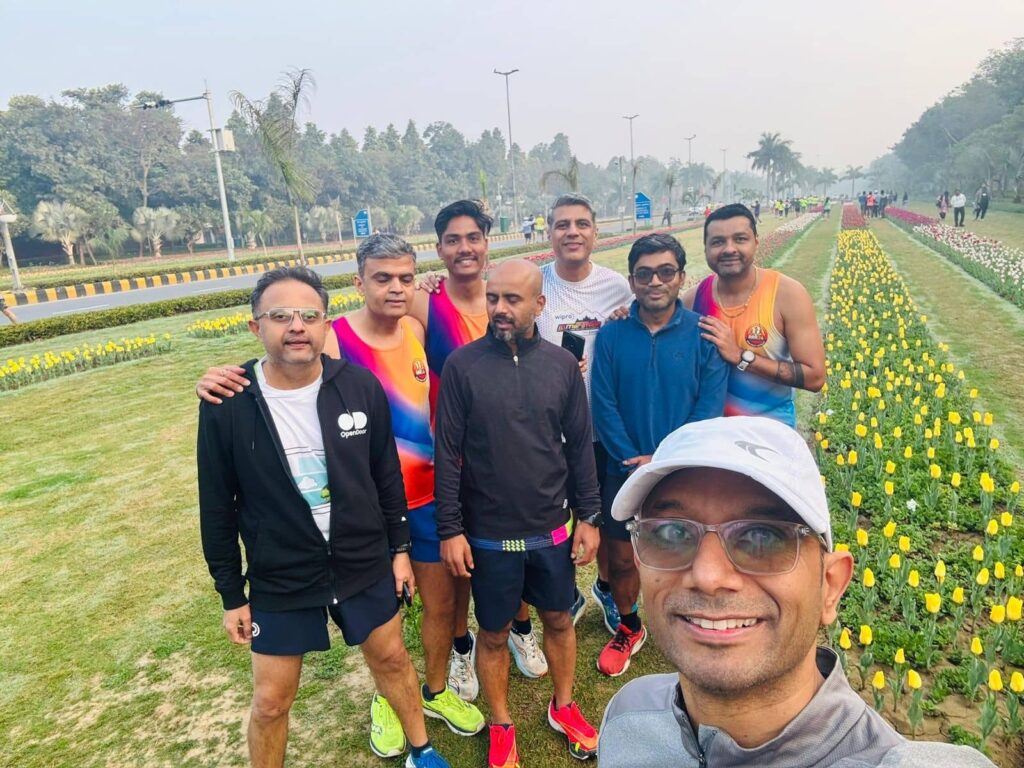
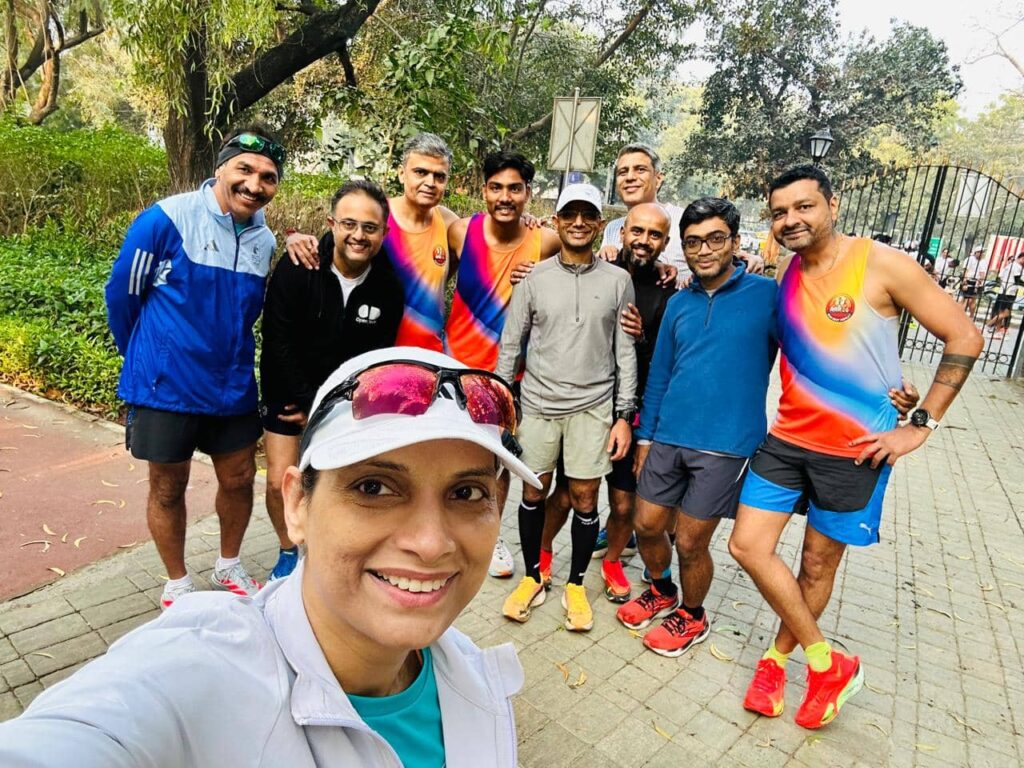
We focused on carb loading through breakfast and lunch and returned again in the afternoon for chai. At 4:00 PM, Rathod Sir conducted a pre-race pep talk where we carefully listened to his guidance, strategies, and warnings.
Dinner was ordered early at 6:00 PM and finished by 7:00 PM, and we began winding down for race day.
Race Day
I woke up at 2:00 AM, fuelled myself with bread and peanut butter, completed stretching, and prepared my reload bottle and gels.
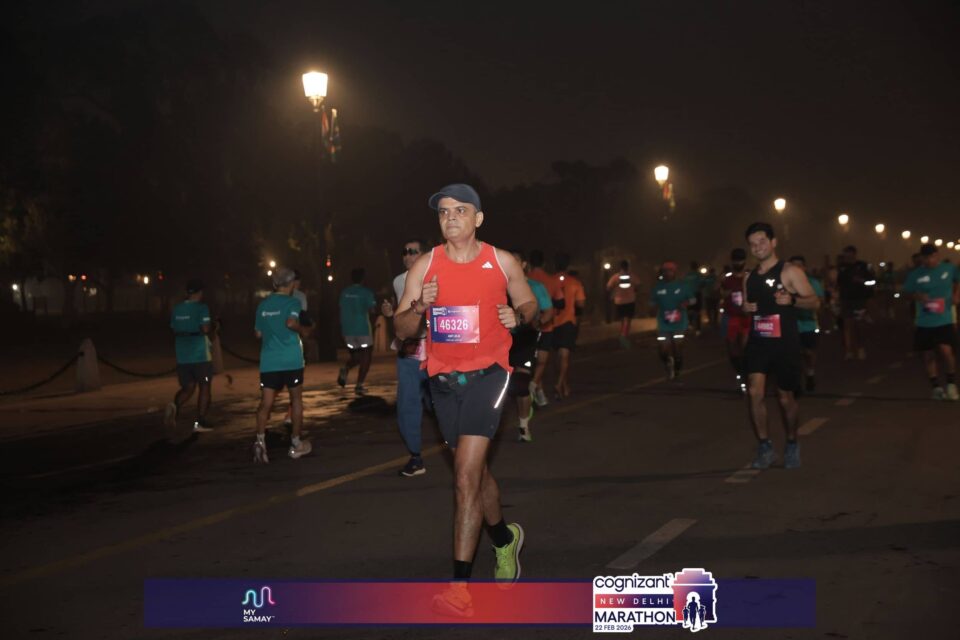
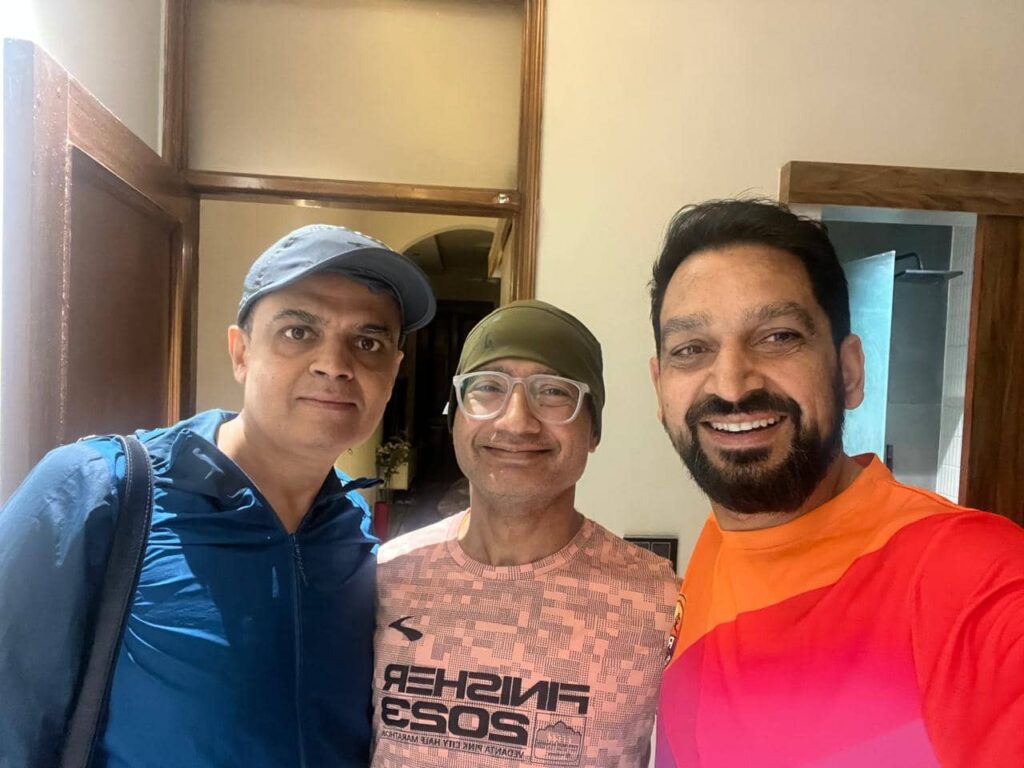
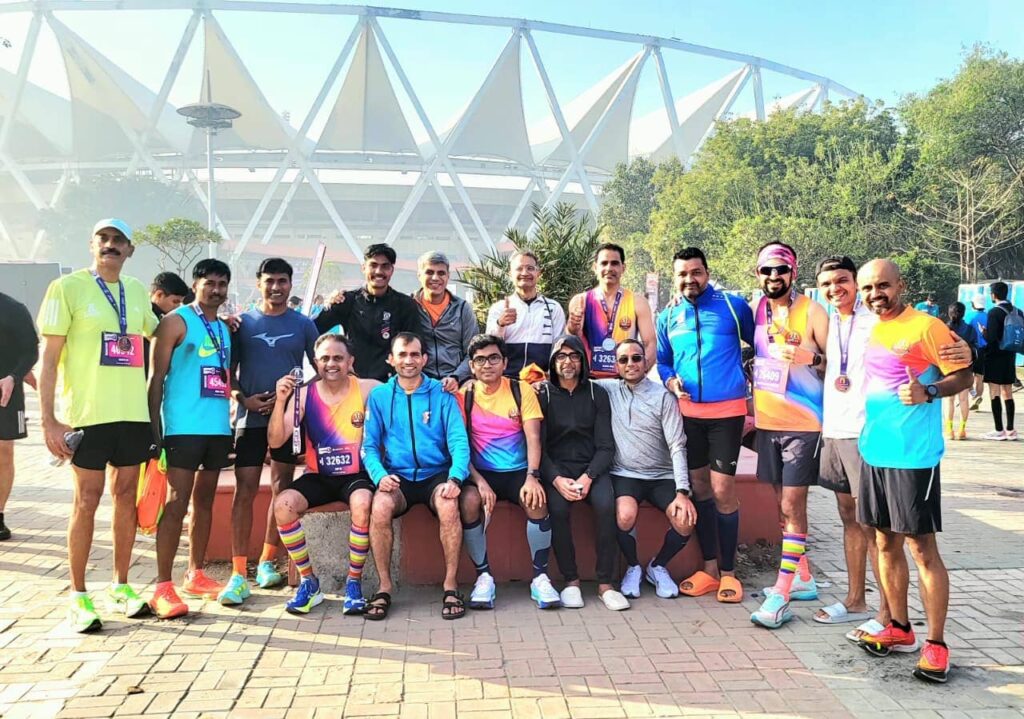
Dr Hari and I met fellow runners and headed toward the event area. After a short jog and group warm-up, we walked to the start line and reached there at 3:55 AM.
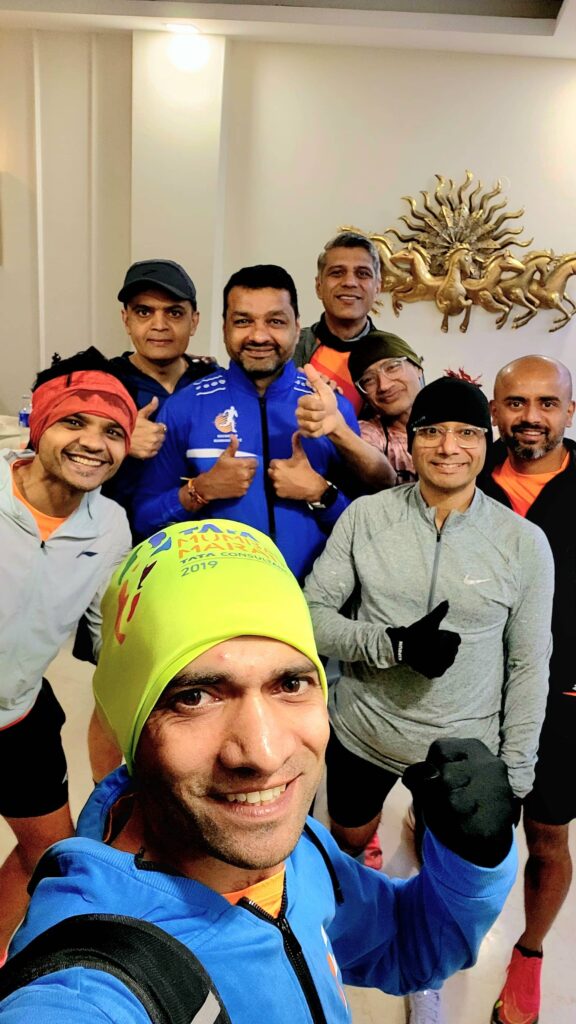
- Elite runners flagged off at 4:00 AM
- General runners started at 4:05 AM
I crossed the start line at 4:06 AM, beginning very conservatively due to heavy crowding. Instead of speeding up and slowing down repeatedly, I kept my pace controlled.
By the second kilometre, I had settled comfortably into my first 16 km pacing band and felt effortless. I followed my fuelling plan strictly — gels every 7 km and hydration every 2–3 km.
After completing the first 16 km, I moved confidently into the second pace bracket. At the halfway mark (21 km), half marathon runners joined the course, creating congestion. Navigating through runners slowed my pace slightly to 6:20–6:24/km.
About 5 km later, the crowd thinned, but I had temporarily lost rhythm. Around 29 km, my pace dropped to 6:26/km. Instead of forcing speed, I stayed patient and gradually rebuilt momentum, returning to around 6:15/km.
At 33 km, fatigue began setting in, so I took a gel earlier at 34 km rather than waiting until 35 km.
The Final Push
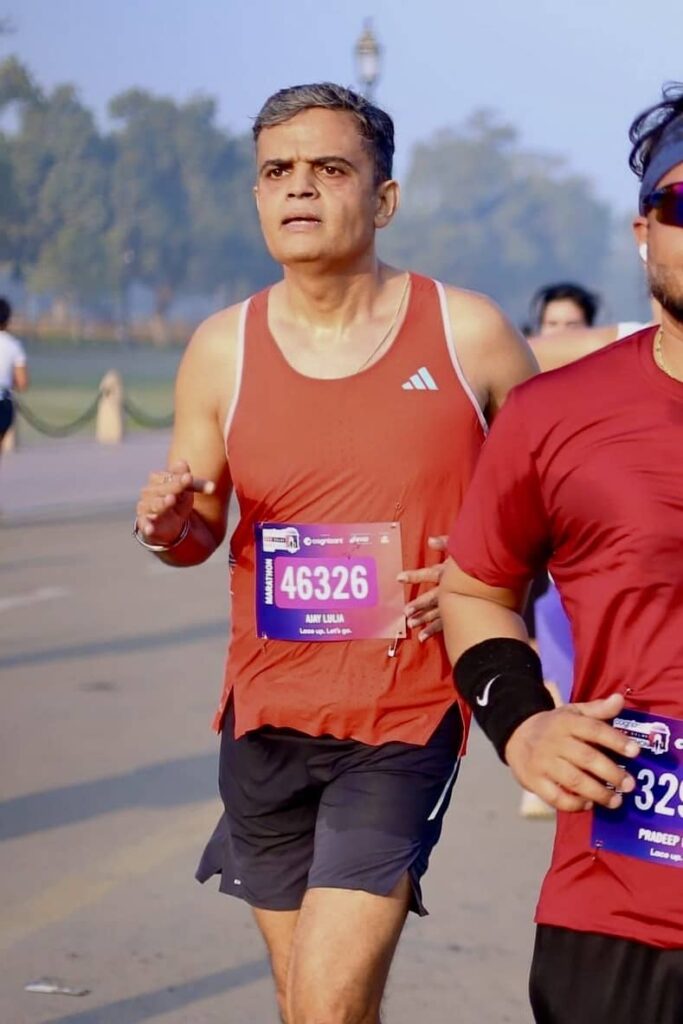
After crossing 35 km, the mental battle began. I kept reminding myself not to slow down.
At 38 km, I briefly walked for a few metres — then immediately restarted, telling myself:
“Only 4 km left.”
At 39 km, I paused again momentarily. This time I reminded myself of everything — the training, pep talks, sacrifices, commitments, and struggles that brought me here.
I refused to stop again.
Gradually, rhythm returned. Step by step, I pushed toward the finish.
The Finish Line — A 33-Minute Personal Best
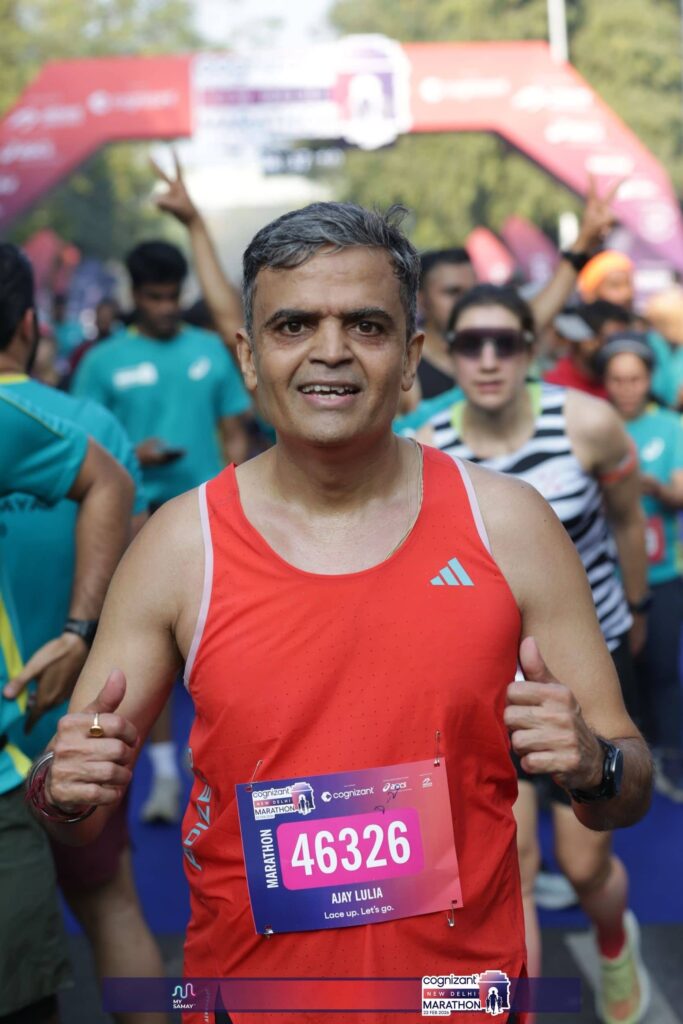
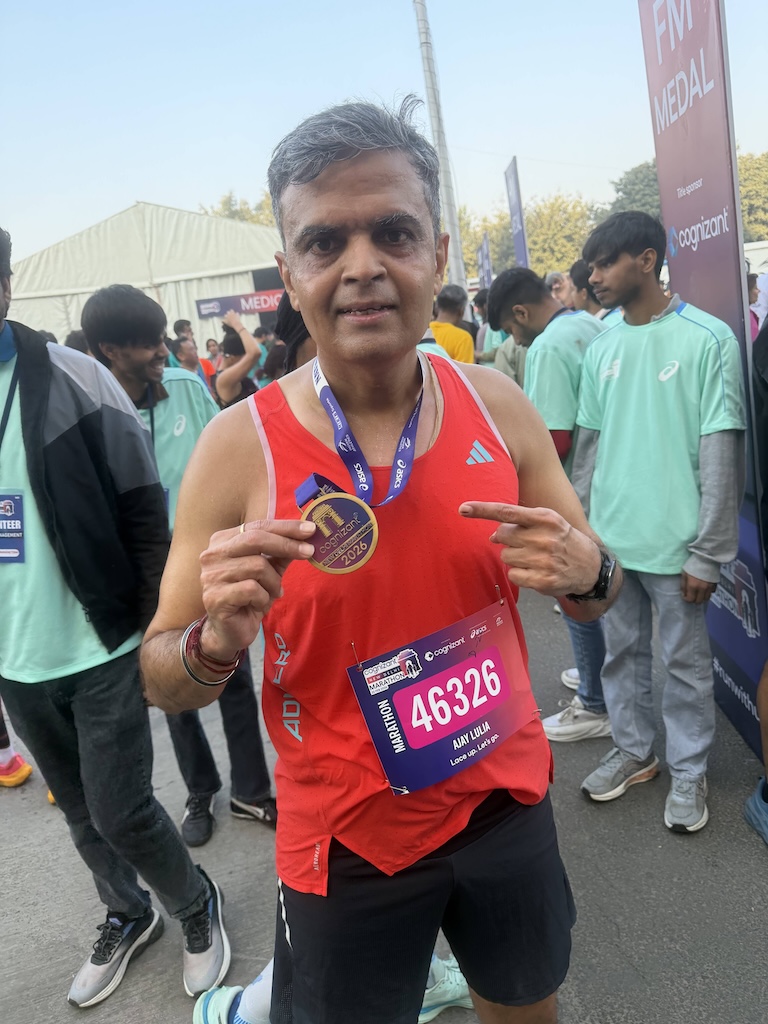
I crossed the finish line in 4:30:00.
A perfectly executed race.
A 33-minute personal best.
While I was happy about achieving a new PB, I was even happier knowing that I had run the entire 42 km consistently. Every kilometre was controlled, with my pace staying between 6:05 and 6:40 per km – a true reflection of disciplined execution.
More than the timing, this race proved that trusting the process, staying disciplined, and believing in your coach’s guidance truly works.
Final Thoughts
The marathon is not just a physical challenge — it is a mental journey.
New Delhi Marathon taught me that success comes from:
- patience over aggression
- execution over excitement
- belief over doubt
This race was not just about finishing a marathon — it was about becoming a stronger runner and a stronger person.
Summary
My journey at the Cognizant New Delhi Marathon (NDM) began as a Half Marathon plan but soon transformed into a full marathon challenge after my coach encouraged me to upgrade. With structured training, disciplined pacing, and careful race execution, the marathon became a true test of patience, endurance, and mental strength. Despite missed long runs due to travel and work commitments, trusting the process helped me stay focused on race day. By maintaining consistent pacing across all 42 km and pushing through the final mental battles, I finished the race in 4:30:00, achieving a 33-minute personal best. More than the timing, this marathon reinforced the importance of discipline, belief, and consistency in long-distance running

2 comments
Congratulations Ajaybhai for your PB. Your dedication towards the training & trust on your self take you on the new peak of this sports. Keep running & keep inspiring us.
Well done, Ajay! Many congratulations! This is a testament to your goal focus and discipline. May 2026 bring the best in you, in your every endeavour!